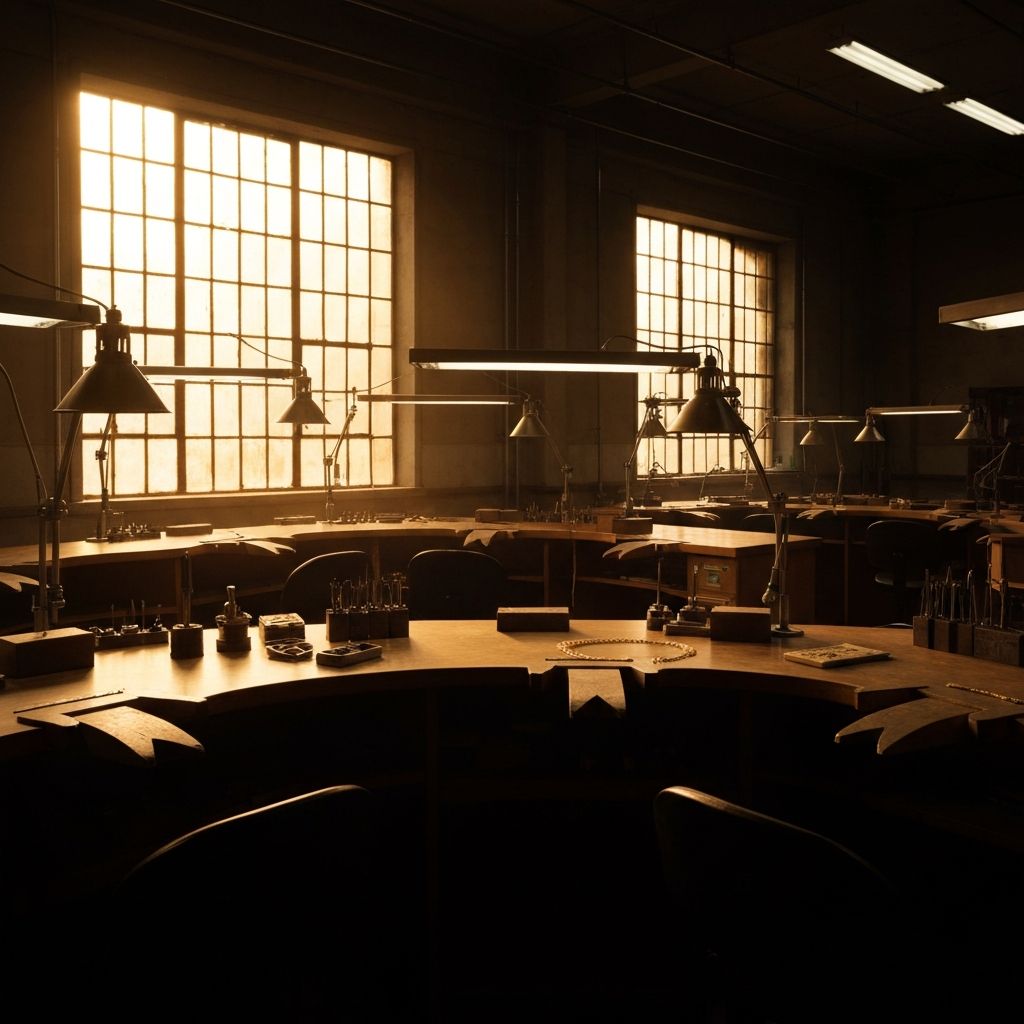
The fine jewellery manufacturing industry is undergoing a profound transformation. As luxury brands demand faster turnaround times, greater customisation, and impeccable quality, manufacturers must adapt their processes while preserving the artisanal essence that defines high-end jewellery.
The Rise of Digital Design in Jewellery
CAD (Computer-Aided Design) and 3D rendering have become indispensable tools in modern jewellery manufacturing. These technologies allow designers to visualise pieces with photorealistic accuracy before any metal is touched, reducing prototyping costs and accelerating the approval process with brand partners.
At D’Or Joiers, our 3D team works hand-in-hand with our master goldsmiths, ensuring that every digital design is not only beautiful but also optimised for production. This collaboration between the digital and the physical is what sets apart truly exceptional manufacturers.
3D Printing: From Prototype to Production
Wax 3D printing has revolutionised the prototyping phase. What once took weeks of manual wax carving can now be accomplished in hours, with a precision that was previously unattainable. But the applications go beyond prototyping — 3D printing is increasingly used in direct production workflows.
In-house 3D printing capabilities mean faster iteration cycles, which translates to shorter time-to-market for new collections. For brands launching seasonal lines, this speed advantage can be the difference between leading a trend and following one.
Sustainability as a Manufacturing Standard
The Responsible Jewellery Council (RJC) certification has moved from a nice-to-have to a must-have for serious manufacturers. Brands increasingly require their manufacturing partners to demonstrate ethical sourcing, environmental responsibility, and transparent supply chains.
Certified manufacturers who can provide full traceability — from raw material to finished piece — are becoming the preferred partners for luxury houses concerned about their sustainability credentials.
The Enduring Value of Craftsmanship
Despite all technological advances, the human touch remains irreplaceable. Stone setting, hand polishing, and fine goldsmith work require skills that take decades to master. The most successful manufacturers are those who invest in both technology and people.
Training the next generation of artisans while equipping them with modern tools is perhaps the greatest challenge — and opportunity — facing the industry today.
What This Means for Brands
For luxury brands seeking manufacturing partners, the ideal collaborator offers:
- End-to-end capabilities — from design and prototyping to finishing and quality control
- Flexibility — the ability to handle both small bespoke orders and large production runs
- Certifications — RJC and other industry-standard credentials
- Investment in technology — without sacrificing artisanal quality
The manufacturers who thrive in 2026 and beyond will be those who view technology and tradition not as opposing forces, but as complementary strengths.
Services associés